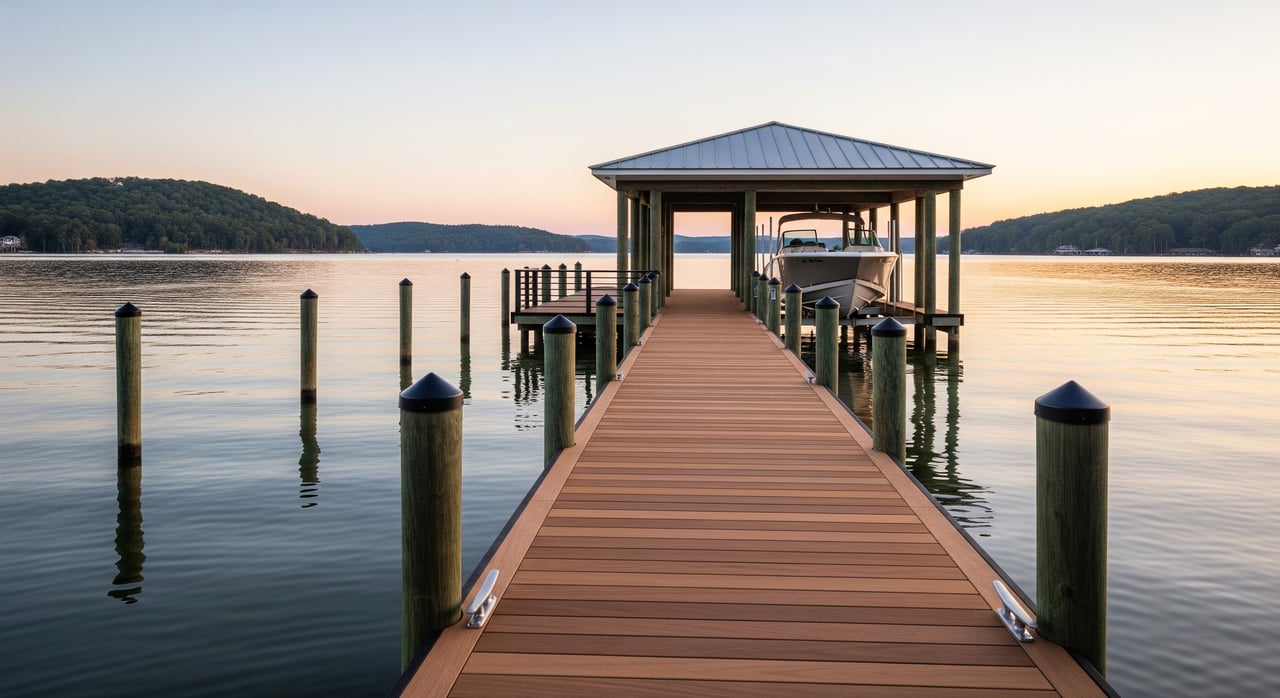
Thinking about adding, replacing, or transferring a dock on Lake Murray from your West Columbia home? You’re smart to get clear on the rules before you start. Dock projects here can touch county, state, federal, and utility requirements, and a missed step can slow your timeline or add costs. In this guide, you’ll learn who regulates what, how long approvals typically take, what they cost, and how to keep your project on track. Let’s dive in.
Who regulates Lake Murray docks
Multiple entities may review a dock project on Lake Murray. Expect some combination of local, state, federal, and private approvals depending on scope and location.
- Lexington County oversees building and zoning, including setbacks, structural safety, floodplain rules, and land-disturbing activity along the shoreline.
- South Carolina agencies include SCDHEC for water quality and wetlands considerations, and SCDNR for resource guidance related to inland waters and fish habitat.
- The U.S. Army Corps of Engineers (USACE), Charleston District, may review work affecting waters of the United States or wetlands. Many small docks fit under a Nationwide Permit. Larger or more complex projects may require an Individual Permit.
- The Lake Murray reservoir owner or operator manages shoreline access and may require a separate dock license, design standards, and fees.
- HOAs or deed covenants can add placement and design rules that are more restrictive than government requirements.
Two key concepts shape many Lake Murray projects. First, riparian rights and shoreline easements: owning waterfront does not automatically guarantee a new dock if easements, covenants, or reservoir rules limit structures. Second, jurisdictional overlap: you may need approvals from more than one entity even for a straightforward dock.
First calls: Start with Lexington County Planning and Building to confirm local permits and setbacks, and contact the reservoir owner to learn lake-specific rules and whether a private dock license is required. Review your deed and any HOA documents to confirm rights and restrictions.
Permit types and when you need them
County building and zoning
Most new docks, major repairs, or expansions require a county building permit. The county checks structural safety, anchoring, setbacks, and floodplain compliance. If you plan to grade the bank or disturb soil beyond a small threshold, you may also need a land-disturbing permit with erosion and sediment controls. Properties in mapped floodplains may require floodplain development permits and added elevation standards.
Typical submittals include a site plan or survey showing lot lines and the normal pool elevation, dock dimensions and layout, contractor information, and erosion control notes.
State water quality and habitat
SCDHEC may be involved if your project affects wetlands or water quality, such as through dredging or fill. In those cases, a state water quality review or certification often coordinates with USACE. SCDNR does not issue building permits but can provide guidance on fish habitat, aquatic plants, and recommended setbacks in sensitive areas.
Federal USACE review
If your project impacts waters of the U.S. or wetlands, USACE review applies. Many small, low-impact docks qualify for a Nationwide Permit if you meet standard conditions. If not, an Individual Permit with a longer, more detailed review may be required. USACE considers footprint in open water or wetlands, navigation impacts, public interest, and any mitigation.
Reservoir owner approval
Lake Murray is a managed reservoir, so the shoreline owner or operator often requires a separate dock license or agreement. They can set design standards, control placement relative to navigation lanes, and charge application or annual fees. This approval can be required even if you secure local and federal permits.
HOA and covenants
If you live in a lake community with an HOA, you may need design review and approval before you submit permits. These private rules can be stricter than county or state standards, so check them early.
Step-by-step timeline
Timing depends on scope, completeness of your application, and whether state or federal review is required. Here is a conservative overview for the Lexington County side of Lake Murray.
1. Due diligence: 1–4 weeks
- Review your deed, plat, and any HOA covenants to confirm riparian rights and identify shoreline easements.
- Call Lexington County Planning and Building to verify permit needs, setbacks, and floodplain status.
- Contact the reservoir owner for lake-specific rules and whether a dock license or agreement is required.
2. Design and pre-application: 2–6 weeks
- Commission a property survey showing lot boundaries, the waterline, and normal pool elevation.
- Prepare dock plans with layout, materials, and piling details. A marine contractor or engineer can help.
- If you plan bank work, prepare an erosion and sediment control plan.
3. Local review: 2–8 weeks
- Submit your county building permit application, plus any land-disturbing or floodplain forms as needed.
- Straightforward projects with complete plans can be approved within a few weeks. If you need a variance or special review, add time.
4. State and federal coordination: varies
- If a Nationwide Permit applies, USACE reviews are commonly on the order of 30–60 days, though coordination can add time. State water quality review typically runs in parallel.
- If you need an Individual Permit or have sensitive habitat or wetland impacts, plan for several months to a year or more.
- Reservoir owner license timelines vary from a few weeks to several months.
5. Construction and inspections: days to weeks
- Small replacements can take a few days; new, larger docks with pilings often take several weeks.
- Expect county inspections as part of the permit conditions. The reservoir owner may require ongoing compliance or periodic checks.
Timing notes:
- Simple floating docks with no dredging and a clear reservoir license often move from design to approvals in 4–12 weeks.
- Projects that trigger Individual Permits or significant wetland or navigation issues commonly run 6–12 months or longer.
Permit fees and project costs
Your exact budget depends on design, materials, contractor rates, and agency fee schedules. Plan for these common items:
- Permit and administrative fees: County building and plan-review fees are generally modest, often tens to a few hundred dollars based on project valuation. Land-disturbing and floodplain permits may add small fees. Reservoir owners may charge application or annual license fees that vary widely.
- Federal and state processing: USACE generally does not charge a fee for standard processing. Some agencies may charge administrative fees depending on program specifics.
- Professional services: Survey work typically ranges from hundreds to a few thousand dollars based on complexity. Design and engineering can range from hundreds to several thousand. If you hire a consultant or expediter, add hourly or flat fees.
- Construction: This is the largest variable. Small, basic floating docks often start in the low thousands. Mid-sized custom docks with pilings, composite materials, or amenities commonly reach into the tens of thousands. Covered slips and lifts can exceed $50,000 to $100,000. Include costs for demolition of an old dock, tree removal, site access, electrical work, and erosion control.
- Insurance and ongoing costs: Some reservoir owners require liability insurance or naming the utility as an additional insured. There may be annual license fees or renewal costs.
Buyer and seller checklists
If you are buying lakefront
- Confirm riparian rights on the deed and check for shoreline easements that limit dock construction.
- Ask for all existing dock documents: reservoir license, county permits, and any as-built plans.
- Verify the current dock’s compliance with county, state, federal, and reservoir owner rules. Unpermitted docks may require retroactive approvals or modification.
- Review HOA or covenant rules. Note any design limits that could affect future upgrades.
- Ask about maintenance history, repairs, and any known disputes or enforcement actions.
- Budget for potential upgrades to bring a dock up to current standards.
If you are selling lakefront
Gather and share copies of all permits, reservoir approvals, HOA letters, and plans.
Disclose any unpermitted work and provide an estimate of steps and costs to regularize it.
Provide as-built drawings if available to help buyers plan future permits and speed their review.
Transfer and renewal details
- Some reservoir licenses transfer automatically when the property sells. Others require the new owner to reapply.
- Local permits are tied to the property and may need an update or transfer after closing. Always confirm requirements with the county and reservoir owner.
Practical tips to avoid delays
- Start with a survey and clear dock plans. Incomplete submittals are the most common reason for delays.
- Confirm whether your design qualifies under a Nationwide Permit to keep federal review streamlined.
- Coordinate HOA and reservoir approvals alongside county permits so nothing sits idle.
- Plan erosion controls and avoid disturbing aquatic vegetation or spawning areas.
- Choose a marine contractor with Lake Murray experience. Local knowledge helps with design, materials, water level changes, and staging.
Who to contact locally
- Lexington County Planning and Building Department: Building permits, setbacks, floodplain, land-disturbing, and fee schedule.
- U.S. Army Corps of Engineers, Charleston District: Nationwide vs. Individual permits and federal review steps.
- South Carolina Department of Health and Environmental Control (SCDHEC): Water quality and wetland coordination.
- South Carolina Department of Natural Resources (SCDNR): Resource guidance for inland waters and fish habitat.
- Lake Murray reservoir owner/operator: Shoreline license program, design standards, application or annual fees, and insurance requirements.
- HOA or covenant administrator: Community-specific design and placement restrictions.
- Local marine contractors and surveyors: Site-specific bids, construction methods, and staging plans.
If you want help aligning a dock plan with your purchase or sale, we can connect you with trusted local pros and help you time the process around your closing.
Ready to talk about a specific Lake Murray property or dock transfer in West Columbia? Reach out to Brian Slinkard at Serhant for local guidance tailored to your goals.
FAQs
Do you need a permit for a small floating dock on Lake Murray?
- Many small, temporary floating docks face fewer requirements, but most permanent docks, pilings, or any work that alters the shoreline, wetlands, or lake bed will trigger permits and usually a reservoir license. Always confirm with the county and reservoir owner first.
How long does a typical Lake Murray dock permit take?
- Straightforward projects often move in a few weeks to a few months. Projects needing an Individual Permit or with wetland or navigation impacts can take several months to a year or more.
What costs should you budget besides construction?
- Plan for survey, design or engineering, county permit fees, potential reservoir application or license fees, and possible insurance requirements. Administrative fees are usually a small portion of the total.
Who should you call first about a Lake Murray dock?
- Start with Lexington County Planning and Building to verify local permits and the reservoir owner to confirm shoreline license rules. Review your deed and HOA covenants to confirm rights and restrictions.
Can a dock license transfer when you buy a Lake Murray home?
- Some reservoir licenses transfer automatically with the property, while others require the new owner to apply. Confirm transfer rules with the reservoir owner and check county procedures for any permit updates after closing.